
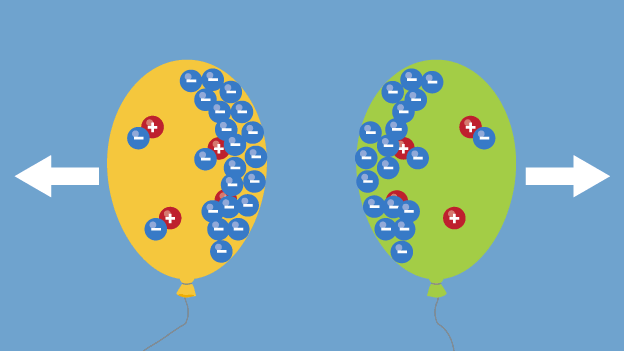
Materials & Static Electricity
Static electricity behaves very differently depending on the material involved. Some materials readily give up electrons, others strongly retain them — and many fall somewhere in between.
Understanding how materials interact with static charge is critical for predicting risk, preventing unwanted discharge, and selecting appropriate control methods across industrial, commercial, and everyday environments.
What You'll Learn

Material Properties & Charge Behaviour
How conductivity, resistivity, and surface chemistry influence how materials gain, hold, or dissipate static charge.

Conductors vs Insulators
Why metals behave differently from plastics, rubbers, and composites — and how this affects static control strategies.

The Triboelectric Series
How material pairings influence charge transfer and why some combinations create more static than others.

Surface Finish & Contamination
How coatings, dust, moisture, and surface roughness can dramatically change static behaviour.

Material Selection for Control
How choosing the right material can reduce static risk before control products are even applied.
Core Articles
How intrinsic material properties determine how static charge is generated and retained.
A practical breakdown of how different material classes behave under static conditions.
The Triboelectric Series: Practical Use
How to apply the triboelectric series to real-world material interactions.
Why Plastics Hold Static Charge
Understanding why polymers are among the most problematic materials for static buildup.
How anti-static coatings, finishes, and additives alter material behaviour.
Material Failure Caused by Static
Examples of damage, contamination, and ignition linked to material-driven static events.
Explore Related Topics
Environments & Conditions
Climate, humidity, and industrial settings that influence static behaviour.
Standards & Authority
Australian and international guidelines for static electricity management.
About Zero Static
Zero Static provides practical, material-focused education to help Australian industries understand and manage static electricity risks.
Our content bridges physics, materials science, and real-world application — supporting safer design, handling, and control across plastics, composites, metals, and coated surfaces.
Ready to apply this knowledge?
See how different materials behave under real Australian environmental conditions and what that means for static control.
